
For decades, sales compensation has followed a familiar pattern: deals close, finance runs calculations, and reps receive a commission statement PDF right before payroll.
On paper, this process works. In reality, it’s outdated—and increasingly ineffective.
Today’s sales organizations operate in real time. Their compensation systems should too.
The Problem with the Traditional Commission Statement
The classic “commission statement PDF” is fundamentally reactive.
It arrives at the end of a cycle—often right before payroll—summarizing what has already happened. By that point:
- Deals are already closed
- Behavior is already locked in
- The opportunity to influence performance is gone
Worse, these statements are often difficult to interpret. Reps are left asking:
- Why did I get paid this amount?
- Which deals counted?
- Did I hit accelerators correctly?
Instead of motivating performance, the statement creates confusion and support tickets.
Learn more about modern compensation operations in our guide to sales compensation management best practices.
What Modern Commission Dashboards Should Include
A modern sales commission experience needs to shift from static reporting to dynamic, real-time engagement.
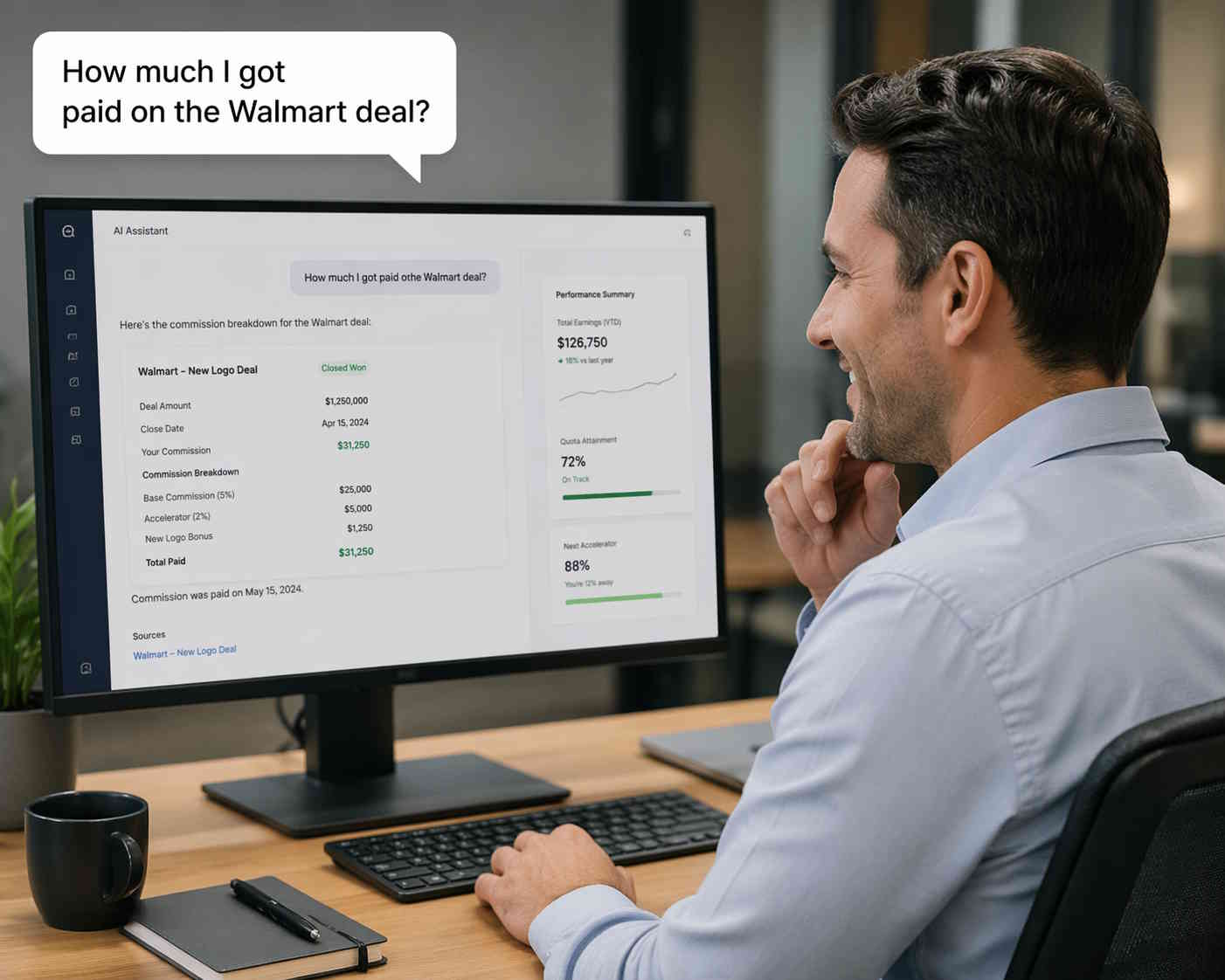
1. Real-Time Explainability
Reps shouldn’t have to wait until payroll to understand their earnings.
As transactions are closed, they should immediately see:
- Commission earned per deal
- Breakdown (base, tier, accelerator, bonus)
- Impact on quota attainment
Every number should be fully traceable—from total earnings down to calculation logic.
Related: How to design transparent commission plans
2. Performance, Not Just Attainment
Traditional dashboards focus on one metric: attainment.
Modern dashboards go further:
- Quota progress over time
- Pipeline impact on future earnings
- Performance by segment, product, or region
- Historical trends
This transforms dashboards into coaching tools—not just reporting tools.
Explore: Quota attainment vs performance metrics explained
3. Continuous Feedback Loops
Compensation should influence behavior during the sales cycle.
With real-time dashboards, reps can:
- Prioritize deals that push them into accelerators
- Adjust focus based on incentives
- Understand timing impact on payouts
This creates a direct connection between effort and reward.
4. AI-Powered Q&A
Even the best dashboards can’t anticipate every question.
AI fills the gap.
Reps should be able to ask:
- “Why did this deal pay less than expected?”
- “What happens if I close this deal this month?”
- “How far am I from my next accelerator?”
And receive instant, contextual answers.
Read more: AI in sales compensation: use cases and benefits
Why Real-Time Commission Dashboards Matter
Modern sales teams are:
- Faster
- More data-driven
- More performance-focused
But many compensation systems are still batch-based and static.
This creates:
- Lack of visibility for reps
- Increased workload for finance teams
- Missed opportunities to drive behavior
Real-time dashboards eliminate this gap.
How EasyComp Delivers a Modern Commission Experience
Platforms like EasyComp are redefining how sales compensation works.
Clear Explainability
Every payout is fully traceable:
- Deal-level breakdowns
- Commission components
- Calculation logic
No more confusion. No more PDF dependency.
Performance-Driven Dashboards
EasyComp provides:
- Quota tracking
- Performance trends
- Earnings impact by deal
Reps gain actionable insights—not just numbers.
Real-Time Visibility
As deals close, compensation updates instantly.
Reps always know:
- Where they stand
- What they’ve earned
- What to do next
AI-Powered Insights
With built-in AI:
- Reps can ask questions about payouts
- Get instant explanations
- Model future earnings scenarios
This turns compensation into an interactive system.
The Bottom Line
The era of the commission statement PDF is over.
Modern sales teams need:
- Real-time explainability
- Performance-focused dashboards
- Continuous feedback loops
- AI-powered insights
Companies that adopt this approach don’t just reduce confusion—they unlock performance.